


Table of Contents
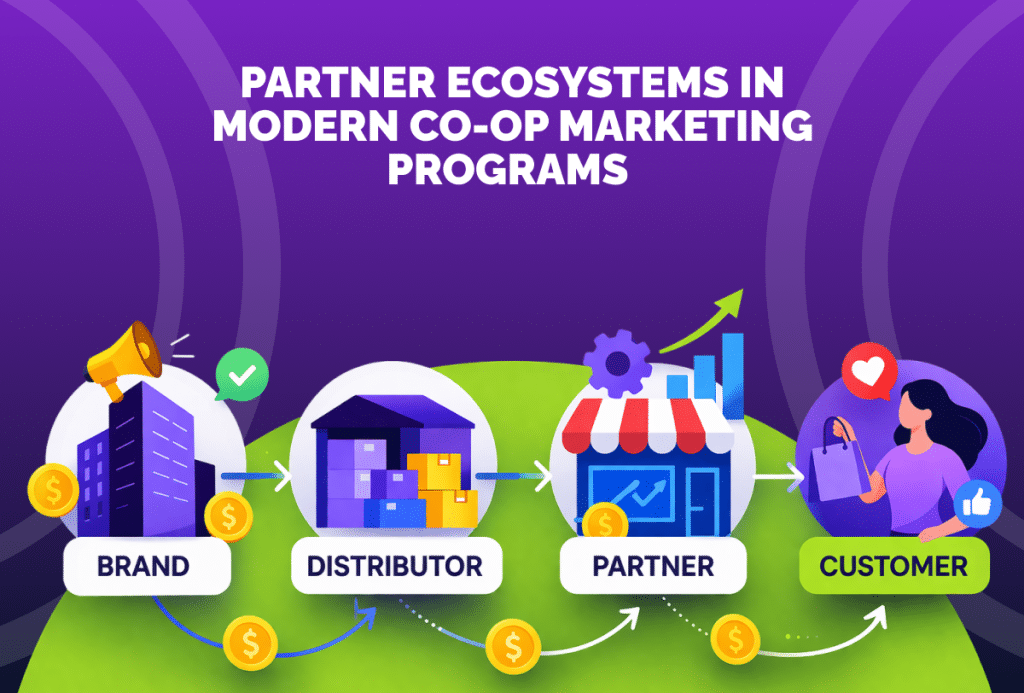
In modern partner ecosystems, co-op marketing programs have become one of the most influential drivers of collaborative growth between brands and their partners. These programs allow organizations to invest in joint marketing initiatives with distributors, retailers, and channel partners. The programs enable them to reach customers more effectively across diverse markets.
At their core, co-op marketing programs represent a shared investment model. Brands provide funding, partners execute campaigns, and both sides benefit from expanded reach and increased revenue opportunities.
Yet while the concept is straightforward, the operational reality behind these programs is far more complex. Co-op fund management across multiple partners, markets, campaigns, and compliance requirements requires a structured lifecycle approach.
Many organizations still treat co-op marketing primarily as a reimbursement process. However, forward-looking companies take a different approach. They treat co-op marketing as a structured lifecycle that connects strategy, funding, partner enablement, campaign execution, and performance optimization.
This article explores the complete lifecycle of co-op marketing programs, examining how modern channel organizations design, manage, and optimize these initiatives to maximize the impact of their marketing investments.

The Strategic Role of Co-op Marketing Programs in Channel Organizations
Partner ecosystems are a major growth driver across industries such as technology, automotive, consumer electronics, and manufacturing. Brands depend on networks of distributors, resellers, retailers, and service providers to reach customers and expand market presence.
Within these ecosystems, co-op marketing programs play a key role by providing partners access to channel marketing funds (CMF) for approved activities. These activities include advertising, events, promotions, and digital campaigns. These funds help partners overcome limited local marketing resources and execute campaigns tailored to their markets.
Beyond individual campaigns, co-op funding strengthens relationships between brands and partners by encouraging shared investment in marketing outcomes. Industry research shows that $14–$35 billion in manufacturer co-op funds go unused each year, and only about 40% of eligible channel partners actively utilize these programs.
This highlights the importance of improving partner engagement and strategic program design. It also supports broader initiatives such as channel partner incentives and partner enablement programs.
As partner ecosystems become central to demand generation, managing collaborative marketing investments effectively is increasingly critical.
The Lifecycle Framework of Modern Co-op Marketing Programs
To understand how organizations maximize the impact of collaborative marketing investments, it is helpful to view co-op marketing programs as a lifecycle rather than a single process.
A lifecycle perspective recognizes that these programs evolve through multiple structured stages, each of which plays a critical role in determining overall program success.
Most high-performing organizations manage their programs across six key phases:
- Strategic planning
- Fund allocation
- Partner enablement
- Campaign execution
- Claims processing and reimbursement
- Performance measurement and optimization
Each stage contributes to the overall effectiveness of the program. When one phase is poorly managed, the entire system can become inefficient.
For example, unclear policies during the planning phase may lead to confusion about eligible activities. Weak enablement may result in partners underutilizing available funding. Limited visibility during measurement can prevent leadership from understanding the return on investment.
Many of the operational risks associated with these programs stem from gaps across these lifecycle stages. As discussed in our analysis of co-op management challenges, limited visibility, compliance issues, and fragmented processes can significantly impact the effectiveness of collaborative marketing investments.
By adopting a lifecycle framework, organizations can manage their programs more strategically, ensuring that each stage supports both operational efficiency and long-term growth.

Phase 1: Strategic Planning for Co-op Marketing Programs
Every successful marketing initiative begins with strong strategic planning. For co-op marketing programs, this stage determines how collaborative marketing investments align with broader business goals and channel strategies.
Strategic planning begins by identifying the specific objectives the program is designed to support. These objectives may include increasing product awareness, expanding into new markets, supporting product launches, or strengthening relationships with key partners.
Organizations must also determine how their marketing investments will support overall channel strategy. In some cases, funding may focus on high-performing partners with proven marketing capabilities. In other situations, brands may prioritize emerging markets where partners need additional support to generate demand.
A critical element of this stage is defining the structure of channel marketing funds (CMF). These funds may be allocated through various models, including revenue-based accruals, fixed program budgets, or tier-based funding structures tied to partner performance.
Another important component is channel governance. Clear policies define how funds are earned, what marketing activities are eligible for reimbursement, and what documentation partners must provide when submitting claims.
Without strong governance, programs can quickly become inconsistent and difficult to manage. Ambiguity around eligibility rules or documentation standards can create confusion for partners and slow down internal workflows.

When organizations approach planning strategically, they create a solid foundation for the rest of the lifecycle. The program becomes aligned with business priorities, structured around clear policies, and positioned to deliver measurable outcomes.
Phase 2: Co-op Fund Allocation and Accrual Models
Once the strategic framework is defined, the next step is deciding how co-op funds will be distributed across the partner network. The co-op fund allocation model directly influences partner participation, campaign activity, and overall program performance.
Many co-op marketing programs use accrual-based models, where partners earn marketing funds based on sales performance or product purchases. A percentage of revenue is set aside as marketing funds that partners can later use to promote the brand. This model ties marketing investment directly to revenue, rewarding partners who generate higher sales with greater access to funds.
Other organizations adopt alternative allocation approaches depending on their program goals:
- Fixed allocations: Partners receive a predefined marketing budget at the start of a program period.
Example: A brand allocates $10,000 in co-op funds to each regional partner for a new product launch campaign.
- Tier-based funding: Allocation varies based on partner status within the ecosystem.
Example: Platinum partners may receive 5% accrual on sales, while Silver partners receive 2%.
- Campaign-based funding: Funds are assigned specifically to support priority initiatives such as seasonal promotions or new market expansion.
Funding models are often integrated with broader partner engagement strategies. For instance, channel partner incentives may reward partners who meet sales or marketing performance targets, complementing the use of co-op funds.
Many ecosystems also operate both co-op and MDF programs simultaneously. Effective MDF and co-op marketing management requires clear differentiation between these funding types since they may have different eligibility rules, approval processes, and reporting requirements.
When allocation models are clearly defined and transparent, partners better understand how funds are earned, how they can be used, and how their marketing activities contribute to shared growth.
Phase 3: Partner Enablement and Program Adoption
Even well-designed co-op marketing programs can fail if partners do not fully understand how to participate.
One of the most common challenges in collaborative marketing initiatives is underutilization of available funds. In many organizations, partners simply do not know how to access funding, or which marketing activities qualify for reimbursement.
Effective partner enablement begins with clear communication. Organizations must provide detailed program guidelines, onboarding materials, and educational resources that explain how the program works.
Channel partner portals are often used to centralize program information. These platforms allow partners to review available funds, access campaign templates, submit claims, and track approvals.
Providing ready-to-use marketing resources can also significantly increase adoption. For example, brands may offer co-branded campaign templates, digital advertising assets, social media content, and event marketing kits.
These resources help partners execute campaigns quickly without having to build marketing materials from scratch.
Partner enablement also connects co-op marketing programs with broader partner marketing programs. When marketing resources, training, and funding are integrated into a unified ecosystem, partners can launch campaigns more efficiently.
Ultimately, the success of collaborative marketing initiatives depends on how easy it is for partners to participate. Programs that simplify participation tend to achieve higher adoption rates and stronger results.

Phase 4: Campaign Execution Across the Channel Ecosystem
Once partners are enabled and funding is available, the lifecycle moves into campaign execution. At this stage, partners use their allocated funds to run marketing initiatives that promote the brand’s products and services in their local markets.

These campaigns can take several forms depending on the partner’s capabilities and target audience:
- Digital advertising: Paid search, display ads, and programmatic campaigns
- Social media promotions: Co-branded campaigns on platforms like LinkedIn, Facebook, or Instagram
- Events and webinars: Local events, trade shows, or virtual product demos
- Retail promotions: In-store campaigns, product displays, or seasonal promotions
- Demand generation: Email marketing, landing pages, and lead generation programs
A major challenge during this phase is maintaining brand consistency across distributed partner networks. While partners often tailor campaigns for local markets, organizations must ensure messaging, branding, and product positioning remain aligned with corporate guidelines.
To support this, many companies provide pre-approved marketing assets, campaign templates, and brand guidelines that partners can adapt locally while maintaining consistency. This approach helps balance flexibility with brand governance.
Organizations must also coordinate global and local campaigns. For example:
- A global product launch campaign may include localized partner ads in regional markets.
- A corporate webinar series might be promoted by partners through local email campaigns.
- Seasonal promotions can combine national advertising with partner-funded local activations.
When campaigns are coordinated effectively across the ecosystem, they amplify brand visibility, expand market reach, and deliver a consistent customer experience across regions.
Phase 5: Claims Processing and Financial Reimbursement
After marketing campaigns are executed, partners typically submit claims to request reimbursement for eligible expenses.
The claims process under co-op fund management is one of the most operationally complex stages of the lifecycle. Partners must provide documentation that proves the campaign was executed according to program guidelines.
Common documentation requirements include invoices, screenshots of advertisements, proof of performance reports, and marketing collateral samples.
Internal teams then review these submissions to verify compliance with program policies before approving reimbursement.
Compliance gaps can significantly delay reimbursements. Missing documentation, incorrect formatting, or missed submission deadlines may cause claims to be rejected or delayed.
Many of these issues arise because organizations underestimate the operational complexity involved in managing co-op funding programs. Compliance workflows and documentation validation are essential components of effective program management.
Organizations that streamline the claims process create a better experience for both partners and internal teams.
Phase 6: Measurement and Optimization
The final stage of the lifecycle focuses on evaluating program performance and identifying opportunities for improvement.
Modern co-op marketing programs must go beyond tracking reimbursements. They should measure how collaborative marketing investments contribute to broader business outcomes.
Organizations often track several performance indicators, including fund utilization rates, partner participation levels, campaign performance metrics, and revenue growth associated with funded initiatives.
These insights help marketing leaders understand which types of campaigns generate the strongest results and which partners are using funds most effectively.
Access to accurate data is essential during this stage. Without visibility into program activity, leadership teams cannot make informed decisions about future funding strategies.
Leading organizations increasingly rely on technology platforms that provide real-time dashboards, automated reporting, and centralized data management.
When measurement systems are integrated across the entire lifecycle, organizations gain deeper insights into how collaborative marketing investments drive growth.
Organizations that integrate strategy, governance, process architecture, technology infrastructure, and performance measurement are better positioned to optimize their programs over time.

The Technology Layer Behind Modern Co-op Marketing Programs
As partner ecosystems grow, managing co-op marketing programs manually becomes increasingly difficult. What may start as a program supporting a limited number of partners can quickly expand to hundreds of partners across multiple regions, product lines, and campaigns. As the scale increases, so does the complexity of managing funding, approvals, and reporting.
Many organizations still rely on spreadsheets, email approvals, and disconnected reporting systems to manage co-op marketing initiatives. While these tools may work for smaller programs, they create operational challenges at scale. Teams often spend significant time reconciling fund balances, validating claims, and coordinating approvals across multiple stakeholders.
These manual processes can lead to several challenges:
- Limited visibility into available and utilized partner funds
- Slow claim approvals due to email-based workflows
- Difficulty enforcing program rules and compliance requirements
- Fragmented reporting across different regions or partner groups
To address these issues, many organizations are adopting purpose-built co-op fund management platforms that introduce automation and centralized program oversight.
These platforms streamline the operational side of co-op marketing by digitizing key processes such as fund accrual tracking, partner fund allocation, claim submissions, and approval workflows. Instead of submitting claims through email or spreadsheets, partners can access a centralized portal where they upload documentation and track claim status in real time.
Modern systems typically include several core capabilities:
- Automated fund accrual tracking based on partner sales or purchases
- Partner portals that simplify claim submissions and documentation
- Digital approval workflows that accelerate reimbursement processes
- Compliance checks that ensure claims meet program requirements
- Real-time dashboards that provide visibility into program activity
These capabilities significantly reduce administrative workload while improving transparency for both program managers and partners.
Another key benefit of modern platforms is improved financial governance. Co-op marketing programs often involve substantial budgets, and maintaining clear audit trails is essential. Technology platforms record every claim, approval, and fund allocation, helping organizations maintain compliance with financial and marketing policies.
Technology also becomes particularly valuable when organizations manage both channel marketing funds (CMF) and market development funds (MDF). While these funding types often support similar marketing activities, they may operate under different eligibility rules, approval processes, or reporting structures.
Integrated platforms allow companies to manage these funding programs within a single environment while maintaining clear separation between them. This makes it easier to coordinate funding strategies and ensure that partner marketing investments align with broader channel growth initiatives.
For example, a modern co-op fund management system can help organizations:
- Track accrued funds across the entire partner ecosystem
- Monitor which partners are actively using their marketing funds
- Identify unused budgets or underutilized programs
- Analyze campaign participation across regions or partner tiers
- Maintain complete audit trails for financial oversight
By introducing a structured technology layer into the co-op marketing lifecycle, organizations can move beyond manual program administration. Instead of focusing on operational complexity, teams can concentrate on optimizing partner engagement, improving campaign performance, and scaling collaborative marketing initiatives.
Ultimately, technology enables co-op marketing programs to evolve from administrative reimbursement processes into strategic, data-driven engines for channel growth.
The Future of Co-op Marketing Programs
As partner ecosystems continue to evolve, co-op marketing programs will play an increasingly strategic role in channel growth strategies.
Several trends are shaping the future of collaborative marketing investments. Artificial intelligence is beginning to support campaign recommendations, helping partners choose marketing activities that align with their target audiences.
Predictive analytics is also enabling organizations to allocate funds more effectively by identifying partners and campaigns that are most likely to generate strong results.
In addition, integrated platforms are helping organizations connect marketing funding with broader partner ecosystem initiatives, including partner marketing programs, incentives, enablement, and analytics.
These innovations are transforming collaborative marketing programs from operational reimbursement systems into strategic growth platforms.
Organizations that embrace this evolution will be better positioned to strengthen partner relationships, expand market reach, and drive sustained revenue growth across their channel ecosystems.
Conclusion
When organizations first implement co-op marketing programs, they often focus on the mechanics of funding and reimbursement. However, the true value of these programs emerges when they are managed as a complete lifecycle.
From strategic planning and fund allocation to partner enablement, campaign execution, and performance measurement, every stage contributes to the overall effectiveness of collaborative marketing investments.
Organizations that adopt a lifecycle approach gain greater visibility, stronger partner engagement, and more consistent program outcomes. Instead of functioning as an administrative reimbursement process, co-op marketing becomes a strategic driver of growth across the channel ecosystem.
As partner ecosystems continue to expand, the ability to manage collaborative marketing investments effectively will become a defining capability for modern channel organizations.
Those that build structured, scalable co-op marketing programs will be better equipped to turn shared marketing investments into measurable and sustainable channel revenue growth.
If you want to learn how to build or optimize your co-op marketing program, contact us to explore how structured program management can help scale partner-driven growth.
FAQs
1. What are co-op marketing programs in channel marketing?
Co-op marketing programs are collaborative initiatives where brands provide funding to channel partners to support marketing activities that promote the brand’s products or services. These funds help partners run campaigns locally while aligning with broader partner marketing programs and brand messaging.
2. How are channel marketing funds (CMF) used in co-op programs?
Channel marketing funds (CMF) are allocated to partners to execute approved marketing activities such as digital campaigns, events, advertising, or promotions. Partners typically submit claims after running campaigns and receive reimbursement once the activities meet program guidelines.
3. What is the difference between MDF and co-op marketing management?
MDF and co-op marketing management differ mainly in how funds are allocated. MDF funds are usually provided upfront for strategic marketing initiatives, while co-op funds are often earned through sales-based accrual models and reimbursed after campaign execution.
4. Why do some co-op marketing programs experience low fund utilization?
Low utilization often occurs when partners lack clear guidance, program communication, or easy access to marketing resources. Simplifying processes, improving partner enablement, and integrating co-op initiatives within broader partner marketing programs can significantly increase adoption.
5. How do co-op marketing programs support channel partner incentives?
Channel partner incentives and co-op marketing programs often work together to motivate partner participation. Incentives reward sales performance, while co-op funds enable partners to run marketing campaigns that generate demand and drive those sales.


